
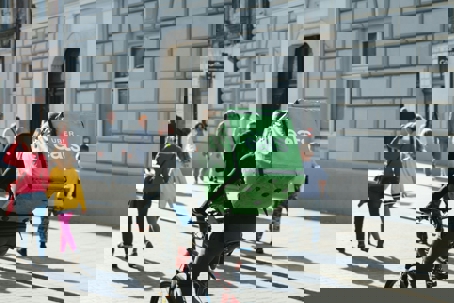
Food delivery apps like DoorDash, Uber Eats, and Instacart have transformed the way Californians work and earn income. But behind the convenience lies a rapidly evolving legal landscape - one that raises serious questions about worker rights, fair pay, and corporate accountability.
In California, app-based drivers are often classified as independent contractors under Proposition 22. However, that classification does not eliminate legal protections or the ability to bring a lawsuit. In fact, employment litigation involving gig workers is one of the fastest-growing areas of law in the state.
If you are a food delivery driver, you may have more legal rights than you realize.
1. Misclassification: The Foundation of Many Lawsuits
At the heart of many cases is whether a driver has been misclassified as an independent contractor instead of an employee.
Under California law, particularly AB 5, workers are presumed to be employees unless the company satisfies strict legal criteria. While Proposition 22 created an exception for app-based drivers, misclassification claims still arise in several key scenarios, including:
- Work performed before Proposition 22 (pre-2020)
- Situations where companies exercise excessive control over drivers
- Hybrid roles that fall outside Prop 22 protections
If misclassification is proven, the exposure to companies can be substantial - often involving years of unpaid wages and benefits.
2. Wage & Hour Violations
If a driver is deemed an employee, they may be entitled to:
- Minimum wage
- Overtime pay
- Meal and rest breaks
- Waiting time penalties
Even under Proposition 22, companies must meet specific pay guarantees. Many lawsuits allege that companies manipulate “engaged time” to underpay drivers, excluding waiting or downtime.
3. Unreimbursed Business Expenses
Under California Labor Code §2802, employers must reimburse employees for necessary business expenses.
Common claims include:
- Gas and mileage
- Vehicle maintenance and depreciation
- Cell phone and data usage
Drivers often argue that delivery platforms shift operational costs onto workers, significantly reducing actual earnings.
4. Workers’ Compensation and Injury Coverage
Delivery driving carries real risks - traffic accidents, injuries, and long-term wear and tear.
While Proposition 22 provides limited benefits, disputes arise when:
- Claims are denied or delayed
- Coverage is insufficient
- The worker should have been classified as an employee (triggering full workers’ comp rights)
5. Proposition 22 Compliance Violations
Even if drivers are properly classified as independent contractors, companies must comply with Prop 22 requirements, including:
- Guaranteed earnings (120% of minimum wage for engaged time)
- Healthcare stipends
- Occupational accident insurance
Many lawsuits focus on underpayment, miscalculations, or failure to provide mandated benefits.
6. Algorithmic Control and Wrongful Deactivation
A growing area of litigation involves how platforms control drivers through technology.
Claims may include:
- Sudden account deactivation without explanation
- Lack of appeal or due process
- Unfair rating systems affecting earnings
These cases often raise broader questions about digital management and worker rights in the gig economy.
7. Unfair Business Practices (UCL Claims)
Under California’s Unfair Competition Law (Business & Professions Code §17200), drivers may assert that:
- The company’s practices are unlawful
- The business model is unfair or deceptive
These claims allow for broader remedies and injunctive relief, making them a powerful addition to employment cases.
8. Retaliation and Whistleblower Protections
Drivers who speak up about:
- Pay discrepancies
- Safety concerns
- Legal violations
may face deactivation or reduced opportunities.
California law protects workers from retaliation - even in nontraditional employment structures.
Why These Cases Matter
Gig economy companies often rely on scale and arbitration clauses to limit exposure. However, California courts continue to scrutinize these practices, and well-prepared cases can lead to meaningful recovery.
The key is understanding how to frame the claims:
- Primary strategy: Misclassification (when applicable)
- Secondary strategy: Proposition 22 violations
- Supporting claims: Wage violations, expenses, retaliation, and unfair competition
Conclusion: Know Your Rights Before You Settle
Too often, workers accept early settlements that fail to reflect the full value of their claims. But employment cases - especially in the gig economy - require strategic litigation and a willingness to go the distance.
Contact the Law Offices of Paul Cheng
At the Law Offices of Paul P. Cheng & Associates in Pasadena, we are recognized as a leading employment law firm in Southern California and the San Gabriel Valley.
What sets us apart:
- Proven experience representing both employees and employers
- A dedicated trial team with real courtroom experience
- Strategic case development designed to maximize results - not quick, minimal settlements
We are not a volume settlement firm.
We prepare every case as if it will go to trial because that is often what it takes to achieve the best outcome.
If you are a food delivery driver and believe your rights have been violated, we invite you to speak with our team.
Contact us today for a confidential consultation and let us help you evaluate your case.
Disclaimer:
This content is for general informational purposes only and does not constitute legal advice. Each case is unique. Please consult an attorney for advice regarding your specific situation.